
You face tight deadlines and strict specs. Late deliveries hurt projects. You must source fast and avoid costly mistakes.
Start with a clear spec, shortlist true factories, validate process capability, then lock terms, samples, and QC. Use AQL inspections and milestone payments. Plan freight early to protect your go-live date.
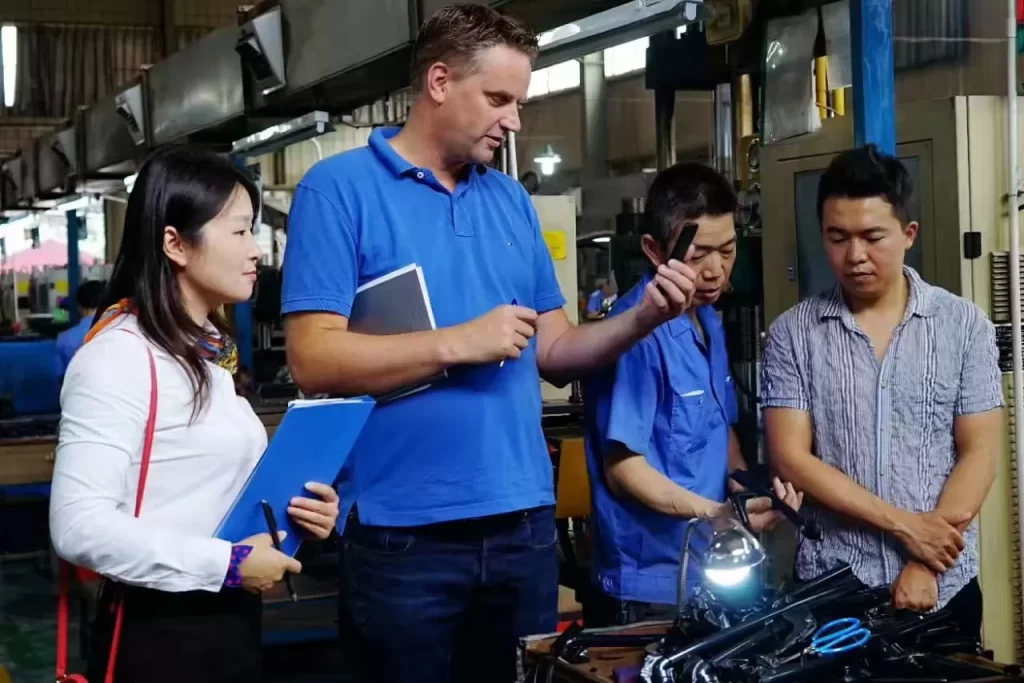
You will get a complete playbook you can copy today. It is simple, direct, and built for B2B buyers who care about quality, risk, and speed.
What should you define before you contact suppliers?
You win time before you send your first email. You remove ambiguity. You force clean quotes. This step looks basic. It saves weeks later.
You should freeze your functional needs first. You create a lean RFQ pack with drawings, materials, and acceptance criteria. Then you define business constraints like lead time, MOQ, and Incoterms. This lets real factories answer fast and accurately.
Scope and spec that keep you in control
- ✅ Problem statement1: what the part must do and where it will work.
- ✅ Drawings2: 2D with tolerances + STEP model for DFM.
- ✅ Material3: NBR/EPDM/Silicone/FKM/HNBR, Shore A range, color, media, temperature.
- ✅ Standards4: e.g., EN 681-1, FDA, REACH, ROHS, UL 94 V-0 (if needed).
- ✅ CTQs5: ID/OD/CS, flash height, surface class, compression set target.
- ✅ Packaging and labeling6: PO, part number, lot, barcode.
Business rules you confirm up front
| Item | Your Baseline | Why it matters |
|---|---|---|
| Annual volume & release7 | Forecast + first PO | Tooling choices and pricing tiers |
| MOQ8 | Per part number | Inventory planning and cash control |
| Lead time target9 | Tooling + mass prod | Schedules quotes and booking |
| Incoterms10 | FOB or DAP for rush | Handover clarity and speed |
| Payment11 | TT milestones | Aligns quality with cash |
| QC plan12 | AQL13 levels + acceptance | Removes disputes on ship day |
✅ Keep the spec short and testable. You do not need a long report. You need measurable CTQs.
Where do you find reliable suppliers—and how do you shortlist fast?
Directories and expos list many companies. Many are traders. You want factories with presses, mixing, and in-house tooling, or proven tool partners. You also want HVAC, automotive, or machinery references you can verify.
Use multiple channels at once. Cross-check their legal name, address, certificates, and production photos. Ask process questions that traders cannot answer.

Your multi-channel search plan
- B2B platforms14: Made-in-China, Alibaba, Globalsources. Filter by “Manufacturer,” ISO 9001, and keywords like compression molding, injection, extrusion.
- Trade shows15: Canton Fair, Hannover Messe, CHINAPLAS, Automechanika Shanghai. Ask for real press tonnage and mixing line brands.
- LinkedIn: Search “rubber molding factory,” “EPDM gasket manufacturer.” Check employee profiles and production posts.
- Referrals16: Freight forwarders and third-party labs often know real factories.
Shortlist filter questions that expose capacity
| Question | What a factory answers | What a trader says |
|---|---|---|
| Press list and tonnage? | Model × tons × qty | “We have many presses.” |
| Mixing in-house or outsourced? | “Open mill + internal mixer spec” | “We can arrange.” |
| Typical shrinkage % for your material? | “EPDM 1.2–1.8% by grade” | “No problem.” |
| Mold lead time by cavity count? | “1 cav 7–10 days, 4–8 cav 15–20” | “Depends.” |
| Daily output on part size X? | “3,000 pcs/line/day” | “Enough capacity.” |
✅ Ask for recent shop-floor photos with today’s Chinese newspaper date on a whiteboard. This is simple and honest.
What RFQ package should you send to get clean, comparable quotes?
A clear RFQ stops vague pricing and hidden fees. You request unit price, tooling, cycle time, yield, inspection, and logistics in one table. You ask for two options: a trial mold for speed and a production mold for volume.
You also request proof of similar parts, material COA, and a draft control plan. You keep it short. You make it easy to fill. You set a reply date.
RFQ contents you can reuse
- Drawing + STEP, CTQs highlighted.
- Material grade target (e.g., EPDM 70 ShA, peroxide cure).
- Expected environments: water/glycol/oil; min–max temperature.
- Volumes: sample lot + first order + annual.
- Tooling: ask for 1-cavity trial mold and multi-cavity production mold.
- Unit price tiers: 1k / 10k / 50k.
- QC: AQL plan, hardness, tensile, compression set; PSI timing at 80–100% pack.
- Logistics: quote FOB [port] and DAP [your address].
- Timeline: tooling lead time, T0 date, T1 date, mass lead time.
Quote comparison table (fill with supplier data)
| Item | Supplier A | Supplier B | Supplier C |
|---|---|---|---|
| Tooling – trial mold | $ | $ | $ |
| Tooling – production mold | $ | $ | $ |
| Unit price @1k | $ | $ | $ |
| Unit price @10k | $ | $ | $ |
| Lead time T0 / T1 (days) | / | / | / |
| AQL & lab tests included | ✓/✗ | ✓/✗ | ✓/✗ |
| Freight (FOB/DAP) | $ | $ | $ |
✅ Ask for process parameters in the quote: press temp, cure time, cavity count. Factories know them. Traders seldom do.
How do you evaluate factories for process capability and delivery reliability?
You reduce risk by checking process, people, and past performance. You ask for PPAP-like artifacts even if you are not in automotive. You keep the audit light and focused on your part’s risks.
You evaluate mixing, molding, trimming, and inspection flow. You want evidence of cavity balance, cure control, and rework limits. You also check labels, lot traceability, and packing standards.

What you request and why it matters
- Material COA17 and batch control → protects consistency.
- Mold design & venting plan → reduces flash and short shots.
- Cavity balance data → ensures repeatability across cavities.
- Cure window & press log → locks process, prevents under-cure.
- In-process checks (ID/OD/CS, hardness) → catches drift early.
- Final inspection plan18 (AQL) → sets acceptance rules.
- Rework/scrap policy → avoids over-trimming and hidden defects.
Quick capability matrix
| Capability | Evidence | Pass rule |
|---|---|---|
| Mixing control | Batch sheet, Mooney, durometer | Records match COA |
| Molding control | Press log, cure window | Parameters within window |
| Dimensional control | FAI report on CTQs | All CTQs within tol |
| Surface & flash | Visual standard + gauges | ≤0.1–0.2 mm or per spec |
| Traceability | Lot-to-box mapping | Lot ID on label |
| On-time delivery | Recent OTIF score | ≥95% on last 6 months |
✅ Do a 30-minute DFM call with the toolmaker. You will learn more in 10 questions than in 20 pages of marketing.
How should you handle samples, approvals, and PPAP/FAI without losing time?
Samples decide schedules. You want speed and clarity. You approve function first. You document and move on.
Use a trial mold for first shots (T0). Approve with a short CTQ checklist and a dimension sheet. If critical tests need time, run them in parallel and proceed to a small pilot (T1) to lock parameters. Update the drawing only if the change affects fit or safety.

Your sample-to-production lane
- T0 from trial mold → FAI report on CTQs + photos + hardness and tensile.
- CTQ approval → sign off function; note minor cosmetics if non-functional.
- T1 pilot on production mold → verify cavity balance, cure, and ejection.
- Golden sample → keep one at your site, one at factory, one sealed with PO.
- Control plan → embed test points and gauges for mass production.
Light PPAP checklist you can request
| Element | Purpose | Page count |
|---|---|---|
| Design record (latest drawing) | Source of truth | 1 |
| Process flow + control plan | Prevent drift | 2–3 |
| FAI dimension report | CTQ proof | 1–2 |
| Material certs (COA/3.1) | Traceability | 1 |
| Appearance standard | Avoid disputes | 1 |
| Packaging work instruction | Smooth receiving | 1 |
✅ Put the golden sample lot photo and AQL plan inside your PO. Everyone aligns on what “good” means.
Which Incoterms and payment terms reduce your risk and keep speed?
Terms decide control. On new suppliers, you want visibility and a clean handoff. For most buyers, FOB or DAP works best. Payment by TT milestones aligns quality and speed.
You tie the final payment to pre-shipment inspection pass and transport handover. You keep OA short unless you have history.
Practical pairing
| Your scenario | Incoterm | Payment | Why it works |
|---|---|---|---|
| You have a strong forwarder | FOB (Ningbo/Shanghai) | TT 30/70 | You control booking and cost |
| You lack a forwarder | DAP (your address) | TT 30/70 | One party handles transport |
| Small urgent cartons | DDP | TT 50/50 | Fast and simple door delivery |
| Large repeat buys | FOB | OA7–14 (cap) | Speed with limited exposure |
✅ Write “70% TT after PSI pass + on-board/AWB issued.” You protect quality and clock.
How do you run fast, reliable quality control from day one?
Quality must be built into the flow. You check what matters and when it matters. You use AQL sampling on CTQs. You time pre-shipment inspection (PSI) at 80–100% packing. You add EN 10204 3.1 for inserts and special compounds.
The QC stack that protects schedules
- CTQ list on the drawing and PO.
- In-process checks at press: hardness and key dimensions.
- PSI at 80–100% pack with AQL 0.65–1.0 for critical/major.
- Photo/video sampling from sealed cartons for final approval.
- Traceability: lot/box mapping; keep one retention sample.
AQL and acceptance table (set this on the PO)
| Defect class | Typical items | AQL you set |
|---|---|---|
| Critical | Wrong material, major dimension out, contamination | 0.65 |
| Major | Flash over limit, surface voids, hardness out | 1.0 |
| Minor | Small cosmetic marks that do not affect fit | 2.5 |
✅ Keep go/no-go gauges for flash and key dimensions. They are fast, cheap, and objective.
How do you choose shipping that meets your date without killing your budget?
Your freight decision depends on chargeable weight, volume, and must-arrive date. You pick express for small rushes, air freight for 100–500 kg, sea–air for bulky shipments on hard dates, and premium ocean when you have a little buffer and larger volume.
Pre-book while pilot production runs. Pre-clear customs with your broker before takeoff. Label boxes to speed receiving.

Quick guide you can save
| Mode | Door-to-door | Best for | Budget impact | Notes |
|---|---|---|---|---|
| Express courier | 3–6 days | ≤100 kg | High | Simple, fastest |
| Air freight | 6–10 days | 100–500 kg | Medium–High | Needs broker |
| Sea–Air | 12–16 days | 0.5–2.0 CBM | Medium | Good balance |
| Premium ocean | 18–25 days | 2–8 CBM | Low | Book early |
✅ Put invoice, packing list, HS code, COO in your broker’s hands before departure. You remove idle time on arrival.
Conclusion
You source well when you define CTQs, verify real factory capability, lock clean RFQs, tie payments to PSI, and book the right freight early. This is how you hit dates without drama.
Need a hands-on factory partner?
You can work directly with Julong Rubber in China. We are a B2B factory for rubber seals, custom rubber, rubber wheels, hoses, and gaskets. We export to Germany, France, the Netherlands, Sweden, and the UK. We support drawings, tooling, PPAP-light, AQL inspections, and urgent air or sea–air shipping.
- Email: info@rubberandseal.com
- Website: www.rubberandseal.com
- Model: Wholesale only, OEM/ODM, factory-direct
-
Understanding problem statements is crucial for defining project goals and ensuring clarity. ↩
-
Explore different types of technical drawings to enhance your design and manufacturing processes. ↩
-
Learn about these materials to choose the right one for your application needs. ↩
-
Familiarize yourself with industry standards to ensure compliance and quality. ↩
-
Understanding CTQs helps in setting measurable quality targets for your products. ↩
-
Discover effective packaging strategies to enhance product safety and traceability. ↩
-
Learn forecasting techniques to optimize production and inventory management. ↩
-
Understanding MOQ helps in planning inventory and managing costs effectively. ↩
-
Setting accurate lead time targets is essential for meeting customer expectations. ↩
-
Understanding Incoterms is vital for managing shipping responsibilities and costs. ↩
-
Explore payment terms to ensure smooth transactions and financial security. ↩
-
A solid QC plan is essential for maintaining product quality and reducing defects. ↩
-
Understanding AQL is essential for setting quality standards in production. ↩
-
Discover top B2B platforms to find reliable manufacturers for your needs. ↩
-
Attending trade shows can provide valuable networking and sourcing opportunities. ↩
-
Learn how to leverage referrals to find trustworthy suppliers quickly. ↩
-
Understanding COA is crucial for ensuring material quality and compliance. ↩
-
A comprehensive final inspection plan helps ensure product quality before shipment. ↩


