
Many buyers get confused between NBR and HNBR. Both sound similar, but their performance and costs are very different. Choosing the wrong one can cause seal failure.
NBR is nitrile butadiene rubber, while HNBR is hydrogenated nitrile butadiene rubber. HNBR offers better heat, oil, and ozone resistance than NBR due to hydrogenation.
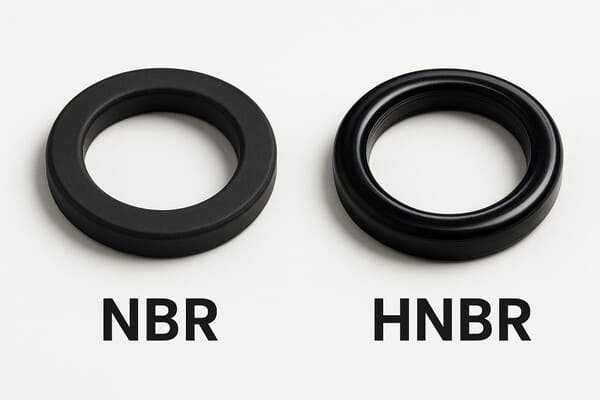
I often meet customers who think HNBR is just a harder version of NBR. In reality, it is a chemically upgraded material that solves many of NBR’s weaknesses.
What is NBR rubber?
NBR is a widely used synthetic rubber made from acrylonitrile and butadiene. It is popular because of its oil resistance and low cost.
NBR (Nitrile Butadiene Rubber) is best for general oil resistance, sealing, and low to medium temperature applications.
I often recommend NBR for fuel hoses, O-rings, and gaskets in moderate conditions. It is the economical choice for many automotive and industrial uses.
Key Features of NBR
| Property | Performance |
|---|---|
| Temperature range1 | -40°C to +120°C |
| Oil resistance2 | Good for petroleum oils |
| Abrasion resistance3 | Moderate |
| Ozone/weathering4 | Poor |
| Cost5 | Low |
NBR is effective, but it cracks quickly when exposed to ozone, weather, or higher heat.
What is HNBR rubber?
HNBR is produced by hydrogenating NBR. This chemical change reduces double bonds in the polymer chain, making the rubber much more stable.
HNBR (Hydrogenated Nitrile Butadiene Rubber) resists heat, oil, ozone, and chemicals better than NBR, with higher mechanical strength.

I once supplied HNBR seals for HVAC compressors that previously used NBR. The NBR seals hardened and leaked after six months. With HNBR, the seals lasted over two years.
Key Features of HNBR
| Property | Performance |
|---|---|
| Temperature range | -40°C to +165°C (up to 180°C peak) |
| Oil resistance | Excellent, superior to NBR |
| Abrasion resistance | High |
| Ozone/weathering | Excellent |
| Cost | Medium |
HNBR sits between NBR and high-end rubbers like FKM. It gives strong performance without the high cost of Viton.
What Are the Key Property Differences Between HNBR and NBR?
Rubber materials look similar at first but behave differently under stress. You need facts to avoid guesswork.
HNBR improves on NBR with higher heat resistance better ozone protection and stronger mechanical properties. NBR gives solid oil resistance at a lower price but ages faster in tough conditions.

I receive calls from procurement teams6 who need simple breakdowns before they order. NBR mixes butadiene and acrylonitrile7 then cures it. HNBR takes NBR and adds hydrogenation8 to saturate the chains. This removes weak spots that cause cracking. I test both in our lab under HVAC oil and heat cycles so I know the real gaps.
Full Breakdown of Material Properties
Chemical Composition and Base Performance
NBR has double bonds that make it good with oils but weak to ozone and heat. HNBR saturates those bonds. The result is a tougher polymer. I run aging tests9. NBR loses flexibility faster in air while HNBR stays stable longer.
✅ Quick fact: HNBR keeps its shape better after long oil exposure.
Temperature Range Comparison
NBR handles up to 120°C continuous. HNBR goes to 150°C and short peaks higher. In cold starts both work but HNBR holds strength longer when heat builds.
Here is a clear comparison table from our factory data:
| Property | NBR | HNBR | Winner for HVAC |
|---|---|---|---|
| Oil Resistance | Excellent | Excellent | Tie |
| Heat Resistance | Good | Excellent | HNBR |
| Ozone Resistance | Poor | Very Good | HNBR |
| Max Continuous Temp10 | 120°C | 150°C+ | HNBR |
| Low Temp Flexibility11 | Good | Good | Tie |
| Abrasion Resistance | Good | Excellent | HNBR |
| Cost Level | Low | Medium | NBR |
This table helps buyers see trade-offs fast.
Mechanical Strength and Durability
HNBR gives higher tensile strength and lower compression set. It resists wear in vibration pads. NBR works for static seals but can tear easier under repeated stress. I look at movement type before I suggest one.
Common HVAC Applications
NBR fits basic indoor gaskets with moderate oil. HNBR fits hot compressor seals and dynamic parts12. Many projects mix both to control costs. I review drawings and conditions to suggest the right split. This saves waste and keeps projects on schedule.
We produce custom hardness13 from 60 to 80 Shore A for both. We add special fillers when needed. Buyers send drawings and we make prototypes fast. This flexibility helps distributors win big HVAC jobs.
I also supply full material certificates and test reports for REACH and RoHS14. This makes your incoming checks simple. For approved partners we offer OA 30 days so you avoid stock shortages during large installations.
How Do HNBR and NBR Compare in Oil Resistance and Temperature?
Oil and heat break down many seals and cause leaks. You need the right rubber to stop this.
Both resist oil well but HNBR keeps its properties longer at higher temperatures. NBR works fine below 100°C while HNBR handles hotter oil zones without hardening fast.
Buyers ask me this every week. They know both handle petroleum oils but want exact limits. NBR performs great with mineral oils and greases. HNBR adds better resistance to additives and oxidation. I test samples in customer fluids so we match exactly.
Oil Chemical and Temperature Performance Details
How Oil Affects Each Material
NBR15 swells slightly in some hydraulic fluids over time. HNBR stays stable longer because hydrogenation reduces attack points. This difference shows in compressor areas with constant oil mist.
Here is a detailed compatibility table from real tests:
| Fluid Type | NBR Performance | HNBR Performance | Recommendation |
|---|---|---|---|
| Mineral Oil | Excellent | Excellent | Tie |
| Hydraulic Fluids | Good | Excellent | HNBR |
| Water | Fair | Fair | Tie |
| Refrigerants | Good | Good | Tie |
| Fuels with Additives | Fair | Very Good | HNBR |
I use this table on calls so buyers decide quickly.
Temperature Impact on Performance
Heat speeds up aging. NBR starts to harden above 100°C. HNBR keeps elasticity up to 150°C. In summer peaks or hot water lines HNBR reduces failures.
Selection criteria you should check every time:
- Temperature: Match max operating heat first.
- Hardness: 70 Shore A works for most seals. HNBR holds it better under stress.
- Chemical compatibility: Send fluid details. I confirm the safest grade.
- Certifications: We meet REACH RoHS and supply test reports for Europe.
Real-World HVAC Examples
One client used NBR in hot zones and saw cracks after one year. We switched to HNBR and the seals lasted over three years. The extra cost paid back through fewer replacements.
We adjust compounds at our factory for exact needs. We increase acrylonitrile in NBR for stronger oil protection or add fillers in HNBR16 for better heat aging. Buyers share data sheets and we match perfectly.
When Should You Choose HNBR Over Standard NBR for HVAC Projects?
Price sensitive buyers want value but also need performance. You must match the rubber to the job.
Choose HNBR over NBR when your system runs hot has strong oil additives or faces ozone exposure. Stick with NBR for mild indoor use where cost matters most.

I walk procurement teams through this on every call. They feel the price difference but want proof it saves money long term. I ask four questions: temperature oil type movement and lifespan. The answers show when HNBR wins.
Selection Criteria and Value Calculation
Temperature as the First Filter
If heat stays below 100°C NBR is enough. Above that HNBR keeps seals tight longer.
Chemical and Mechanical Needs
HNBR resists oxidation and wear better in dynamic parts. NBR suffices for static gaskets with light oil.
Here is a decision table we use with buyers:
| Condition | Choose NBR | Choose HNBR | Reason |
|---|---|---|---|
| Temp below 100°C | Yes | No | NBR sufficient |
| Hot oil or additives | No | Yes | HNBR lasts longer |
| Ozone or outdoor exposure | No | Yes | Better protection |
| Dynamic vibration17 | Sometimes | Yes | Superior strength |
| Short project tight budget | Yes | No | NBR saves upfront |
| Long-term HVAC contract | No | Yes | Lower total cost |
This table speeds up quotes.
Hardness and Customization
Both come in 60-80 Shore A. HNBR holds hardness in heat. We fine-tune durometer for your grooves. We make custom shapes pads hoses and gaskets. Buyers send drawings and get prototypes fast.
Certifications and Supply Chain
We provide full test reports for both. HNBR needs extra checks for high-performance claims but we handle it. We control production so lead times stay short. Approved buyers get OA 30 days which helps cash flow when you stock for big projects.
I once helped a client run numbers for a school HVAC job. HNBR added cost upfront but cut replacements by half over three years. We now supply a mix based on each part’s duty. This keeps his margins strong.
At Julong Rubber we own the factory and adjust recipes fast. You get consistent quality custom solutions and reliable delivery. Third-party inspections are welcome. This reduces risk for your incoming checks.
Conclusion
HNBR improves heat ozone and strength over NBR but costs more. Pick NBR for basic jobs and HNBR for demanding HVAC parts.
Contact me at info@rubberandseal.com or visit www.rubberandseal.com. At Julong Rubber we supply custom HNBR and NBR seals gaskets and pads with reliable quality and fast delivery. Let us help you choose the right material for your next project.
-
Learn about the temperature capabilities of HNBR rubber to ensure it meets your operational requirements. ↩
-
Discover why HNBR's oil resistance makes it a preferred choice for demanding applications. ↩
-
Explore the abrasion resistance of HNBR to understand its durability in harsh environments. ↩
-
Find out how HNBR performs against ozone and weathering, crucial for outdoor applications. ↩
-
Get insights into the cost implications of choosing NBR versus HNBR for your projects. ↩
-
Explore this resource to understand how procurement teams can optimize their material selection process. ↩
-
Discover the role of these chemicals in rubber production and their impact on material performance. ↩
-
Understand the process of hydrogenation and its benefits for rubber materials. ↩
-
Learn about aging tests and their significance in evaluating rubber material durability. ↩
-
Understanding the max continuous temperature helps ensure the right material choice for HVAC applications, preventing failures and costly repairs. ↩
-
Understanding low temp flexibility is crucial for selecting the right rubber for HVAC applications, ensuring durability and performance. ↩
-
Learn about the requirements for materials used in dynamic parts of HVAC systems. ↩
-
Find out how custom hardness is tailored in rubber materials for specific applications. ↩
-
Understand the importance of REACH and RoHS certifications in ensuring material safety and compliance. ↩
-
Learn about NBR's unique properties and applications to make informed decisions for your projects. ↩
-
Find out why HNBR is preferred in many industrial applications due to its superior properties. ↩
-
Explore this resource to understand how different materials perform under dynamic vibration, ensuring optimal HVAC system reliability. ↩


